What is Cord Blood Banking?
Cord blood banking is the process of collecting and storing stem-cell-rich blood from a newborn's umbilical cord and placenta immediately after birth for potential medical use. This blood is a rich source of hematopoietic stem cells (HSC), which mature into blood and immune cells and possess self-renewing capabilities.78 Understanding what these cells do and how they are used is an important part of deciding if banking is right for your family.
What are Cord Blood Stem Cells?
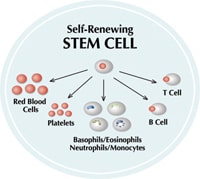 One Cell. Many Possibilities.
Hematopoietic (he-mah-toe-po-ee-tic) stem cells are the building blocks of the blood and immune systems.
Versatility: These cells can become red blood cells (which carry oxygen), white blood cells (which defend against illness), or platelets.
Regeneration: They can rebuild a damaged immune system or replace blood cells affected by disease.
Less Exposure: Since these cells are collected at birth, they typically have not been exposed to viruses, chemicals, or environmental pollutants that can alter cell function.81
Match Potential
Cord blood stem cells are a 100% match for the baby. It’s important to understand that If your child develops a blood cancer or genetic condition, their own cord blood is usually not the right option for a traditional transplant. Physicians often require cells from a donor—ideally a brother or sister who is a close match and not a carrier of the disease. An unrelated cord blood or adult donor may also be used if a family member is unavailable.71
Siblings: There is a 75% chance of a partial match for siblings who share the same biological parents.
38
Parents: There is a 100% chance of being a partial match for the biological parents.
How is Cord Blood Used Today?
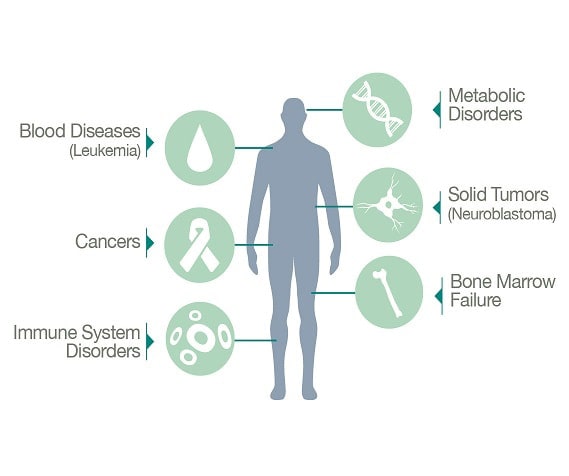
Since the first successful transplant in 1988, donor cord blood has been used in over 60,00015 transplants worldwide for nearly 80 diseases and conditions, including blood cancers, blood disorders, metabolic conditions, and immune disorders.12 For many diseases currently treated with cord blood, utilizing cells from a donor, whether related or unrelated, is required.
These treatments primarily focus on diseases of the blood and immune system, where cord blood stem cells can rebuild healthy blood cells and immune function. Some of the most common current uses include:
- Blood Cancers:
- Cancers that start in blood-forming tissues like bone marrow or immune system cells, causing abnormal blood cell production (e.g., leukemia, lymphoma).
- Blood Disorders:
- Conditions that impair the body's ability to produce healthy blood cells or affect their shape, function, or number (e.g., sickle cell anemia, thalassemia, aplastic anemia).
- Immune Disorders:
- Conditions where the immune system does not function properly, increasing infection risk (e.g., severe combined immunodeficiency [SCID], Wiskott-Aldrich syndrome).
- Metabolic Disorders:
- Genetic conditions that prevent the body from properly breaking down certain substances, leading to harmful buildup in cells and tissues (e.g., Hurler syndrome, Krabbe disease).
What are the Future Possibilities for Cord Blood?
Cord blood stem cells are at the forefront of regenerative medicine, a field of science focused on repairing, replacing, or regenerating damaged human cells, tissues, or organs to restore normal function.80 Researchers are conducting clinical trials to explore the potential of these treatments in addressing conditions previously considered untreatable, offering hope for future breakthroughs. Conditions currently under investigation include:65
- Neurological:
- Autism spectrum disorder, cerebral palsy, stroke, Alzheimer's Disease, and traumatic brain injury.
- A recent meta-analysis found that adding cord blood stem cell infusion to standard rehabilitation significantly improved motor skills in children with cerebral palsy, showing early promise for neurodevelopmental therapies.
- Autoimmune:
- Type 1 diabetes, multiple sclerosis, Crohn's disease, and rheumatoid arthritis.
- Conditions where the immune system attacks the body are being explored in trials using cord blood stem cells to “reset” the immune system and reduce harmful inflammation.
- Cardiovascular:
- Heart disease, vascular damage, and hypoplastic left heart syndrome.
- Cord blood stem cells are being explored for their potential to improve blood flow and reduce inflammation in heart tissue after a heart attack, potentially aiding in the repair of damaged cardiac tissue.
- Orthopedic:
- Osteoarthritis, spinal cord injury
- Organ Repair:
- Lung disease, liver disease, wound healing
These emerging applications highlight the forward-thinking value of banking cord blood stem cells today, ensuring your family has access to future medical advancements in the future.
What are Your Cord Blood Banking Options?
When deciding on cord blood banking, parents choose between two main options: public cord blood banking (donation) or private (family) cord blood banking. Both preserve the valuable hematopoietic stem cells in cord blood. The key difference? Public banking makes the cord blood available to anyone in need, while private banking reserves it exclusively for your family. Ultimately, the right choice depends on your family’s health history, budget, and delivery location. If you want the peace of mind that having your stem cells available may bring, then private banking may be for you.
Public vs. Private Banking: What is Right for Your Family?
As a hybrid bank, Cryo-Cell offers private storage for all families, along with a public bank collection site at Cedars-Sinai in Los Angeles.
| Feature |
Public Banking |
Private Banking (Family) |
| Ownership |
None (anonymous donation) |
You own it. |
| Access |
Available to anyone who matches. |
Exclusive to the family. |
| Best For |
Altruistic impact (increasing donor inventory) |
Families with medical history who want guaranteed access. |
| Option Availability |
Limited public collection sites. |
Available with enrollment |
| Cost |
Free to donate. |
Varies between $1,000-$2,500 initial fee and $150-$400/year annual storage fee. |
How Does Cord Blood Banking Work?
Cord blood banking with Cryo-Cell preserves your baby’s powerful stem cells for potential future medical use. Here’s the full overview:
- Enrollment & Kit Delivery: Sign up online or by phone; receive your collection kit weeks before your due date.
- Collection: As described above, performed by your healthcare provider right after delivery.
- Transport: Within 2 hours of birth, call 1-800-786-7235, option 4 to schedule the medical courier. The courier picks up directly from your hospital room.
- Processing & Testing: Testing for cell count, viability, sterility, and infectious diseases, followed by processing (standard or premium PrepaCyte-CB).
- Storage: Stem cells are cryopreserved in long-term storage.
Collection and Processing
How is Cord Blood Collected?
Cord blood collection is a simple, safe, and completely painless process for both mother and baby. It occurs right after delivery—whether vaginal or C-section—and does not interfere with labor, delivery, or bonding time. This procedure is performed in thousands of hospitals worldwide and is compatible with most birth plans.
Here's Cryo-Cell's step-by-step process :
- Before Delivery: Enroll with Cryo-Cell for free (usually in the third trimester) to receive a sterile collection kit to bring with you at the time of delivery.
- Following Birth: Once the baby is delivered and the umbilical cord is clamped and cut, your healthcare provider (obstetrician, midwife, or nurse trained in collection) inserts a needle into the umbilical vein in the cord.
- Gravity-Assisted Collection: The blood remaining in the placenta and cord drains into the sterile collection bag. This process typically takes just 5–10 minutes.
- Collection Size and Considerations: A typical cord blood unit collected at birth is naturally small. In review of our internal data, we found that our units contain, on average, enough stem cells to treat a child weighing up to about 54 pounds—roughly the size of an average 6- or 7-year-old. For bigger children or adults, physicians may need to combine two cord blood units or utilize donated stem cells from an adult. Research is exploring newer stem cell expansion technologies to make smaller cord blood units viable for larger patients. 84
- Shipped: The collection bag is labeled, packaged, and shipped overnight to Cryo-Cell’s lab for processing and storage.
How is Cord Blood Processed and Cryopreserved?
After the cord blood collection arrives at the laboratory, it undergoes a specialized process to prepare the cells for long-term cryopreservation. This stage is designed to remove non-therapeutic components—specifically red blood cells (RBCs) and plasma—while capturing the valuable hematopoietic stem cells.
This step is vital for two reasons:
- Purity: Reducing the number of RBCs minimizes the risk of complications during a future transplant.
- Potency: Maximizing the recovery of functional stem cells improves the speed of "engraftment," which is how quickly the new cells begin producing healthy blood in a patient.
What Processing Methods are Available?
The processing method is a foundational element of the cord blood banking conversation because it directly dictates the final quality and purity of the collection. While every method aims to reduce RBCs and capture stem cells, their efficiency and clinical outcomes vary significantly.
Why Processing Choice Matters.
The choice of processing method directly impacts the therapeutic potential of the cord blood. By ensuring a high yield of functional stem cells and a low concentration of unwanted red blood cells, the processing step helps ensure that the cord blood is optimized for the best possible medical outcome.
Common Industry Methods:
- Hetastarch (HES): A manual processing method used since 1988 with a long history of clinical use. It is Cryo-Cell's standard processing option.
- Automated systems (AutoXpress® (AXP) and Sepax: Centrifugal system that automates cell separation.
- PrepaCyte-CB: Cryo-Cell's premium processing method utilizes a unique sedimentation process rather than traditional centrifugation.
You can read more about the different cord blood processing methods here.
What Makes Prepacyte®-CB Different?
PrepaCyte®-CB is Cryo-Cell's advanced processing technology, designed with the end-use in mind:
- Up to 80% Stem Cell Recovery: This method yields the highest number of Colony-Forming Units (CFUs) and the highest recovery rate of hematopoietic stem cells compared to standard methods.3 The CFU assay is the gold-standard measure for potency and potential for stem cell engraftment.4
- Removes up to 99% Red Blood Cells: Creating a cleaner, safer product with potentially fewer risks in future use.3
- Consistency Across Volumes: The only processing method where total nucleated cell (TNC) and CD34+ cell recoveries remain consistent, regardless of the initial cord blood unit volume.4
- Faster engraftment: PrepaCyte-CB units used in over 350 transplants showed up to a 4–5 day reduction in neutrophil engraftment time compared to other technologies.7
What Does Cord Blood Banking Cost?
Cord blood banking with Cryo-Cell is a one step toward safeguarding your family’s long-term health. We prioritize transparent, straightforward pricing that covers every essential step—from the collection kit to the first year of storage.
What's Included in Your Initial Investment?
No matter what services you choose, the plan is all-inclusive of the critical first steps:
- Cord Blood Collection Kit: Shipped directly to you upon enrollment.
- Medical Courier: Priority transport from the hospital to our laboratory.
- Clinical Processing: Comprehensive testing and advanced preparation.
- First Year of Storage: Secure preservation in our FACT-accredited facility.
The Cryo-Cell Advantage:
- No Risk Enrollment: Your kit is free when you enroll. No fees are charged until your baby is born and your sample is successfully processed.
- Comprehensive Service: Every plan includes a medical courier, specialized testing, and processing.
- Flexible Options: We offer monthly payment plans and promotions to ensure this vital resource is accessible to every family.
Pricing varies based on your choices: standard vs. premium (PrepaCyte-CB) processing, and whether you add cord tissue banking. Cryo-Cell offers flexible payment plans (e.g., monthly installments) to make it more accessible, and promotional offers (like seasonal discounts with coupon codes) are often available. Visit our pricing page.
Can You Bank Cord Blood if You Choose Delayed Cord Clamping?
Many parents choose Delayed Cord Clamping (DCC)—the practice of waiting 30 to 60 seconds after birth before clamping the umbilical cord, as recommended by organizations like ACOG. This process supports the transfer of blood volume to the newborn immediately following delivery.
A common misconception is that DCC leaves too little blood for successful banking. While DCC may result in a smaller initial collection volume, it is possible to perform both DCC and cord blood banking. The choice of processing method is particularly important when doing both. PrepaCyte-CB is the only processing method where total nucleated cell (TNC) and CD34+ cell recoveries remain consistent, regardless of the initial cord blood unit volume.4
Frequently Asked Questions
Banking cord blood is one more way to safeguard your family's future health. We understand that parents often have many questions when considering this process.
The Parent's Guide to Cord Blood, an independent educational organization, has identified key questions that every family should ask their cord blood bank. We also have a comprehensive FAQ section for answers to common questions. If you are looking for specific information not covered in our FAQs, our Cord Blood Educators are available to assist you online (website chat) or by phone.
Want to Request More Information?
We are committed to providing you with the facts you need to make an informed decision. Whether you have questions about the science, the process, or the latest clinical research, we can provide the specific information your family requires.
2. In order to preserve more types and quantity of umbilical cord stem cells and to maximize possible future health options, Cryo-Cell’s umbilical cord tissue service provides expectant families with the opportunity to cryogenically store their newborn’s umbilical cord tissue cells contained within substantially intact cord tissue. Should umbilical cord tissue cells be considered for potential utilization in a future therapeutic application, further laboratory processing will be necessary. Regarding umbilical cord tissue, all private blood banks’ activities for New York State residents are limited to the collection, processing, and long-term storage of umbilical cord tissue stem cells. The possession of a New York State license for such collection, processing, and long-term storage does not indicate approval or endorsement of possible future uses or future suitability of these cells.