A Diagnosis the Family Never Expected
Isaac was born on August 14, 2012. Ten days later, a letter arrived with the results of his newborn screening, a routine test that had identified an abnormal hemoglobin pattern.
Shaundell knew she carried sickle cell trait. Curtis did not know that he carried a rarer hemoglobin trait called O-Arab. After genetic testing, the family learned that Isaac had inherited a hemoglobin variant from each parent and had sickle cell disease.
For nearly two years, Isaac showed no symptoms. Then, days before Mother’s Day, his hands and feet began to swell while he was playing with his sisters, and he had trouble walking. His first hospital stay lasted almost a week, and unfortunately, it would not be the last.
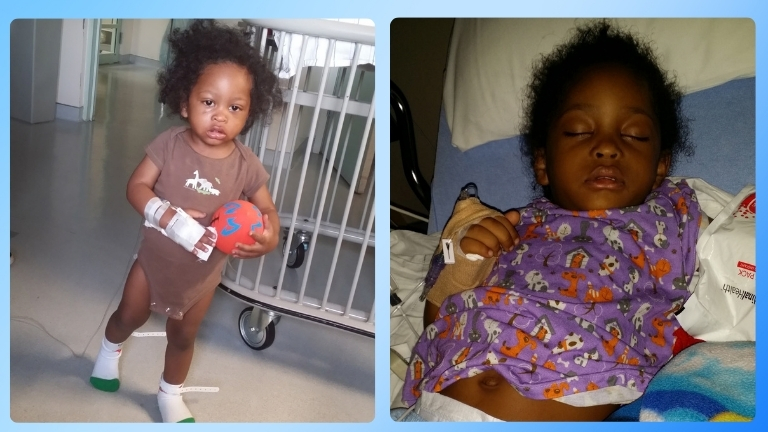
Over the next several years, the disease showed its severity. Sickle cell pain crises can occur when sickled red blood cells block small blood vessels, reducing oxygen delivery and causing severe, unpredictable pain. He wanted to be a kid, but ordinary childhood activities could have immediate physical consequences. Cold, heat, dehydration, and exertion could trigger a crisis, frequently sending him to the emergency room for treatment and pain management.
At home, the family used Norco and Motrin, along with heating pads and warm showers, to help manage his pain. Hospital stays brought another kind of hardship: being separated from Nathan, the person who could make almost anything feel normal. The numbers tell their own story. Over the years, Isaac experienced:
- Approximately 25 to 30 hospitalizations
- More than 100 emergency room visits (not all of which ended in admission)
- Four New Year’s Eves in a row in the hospital
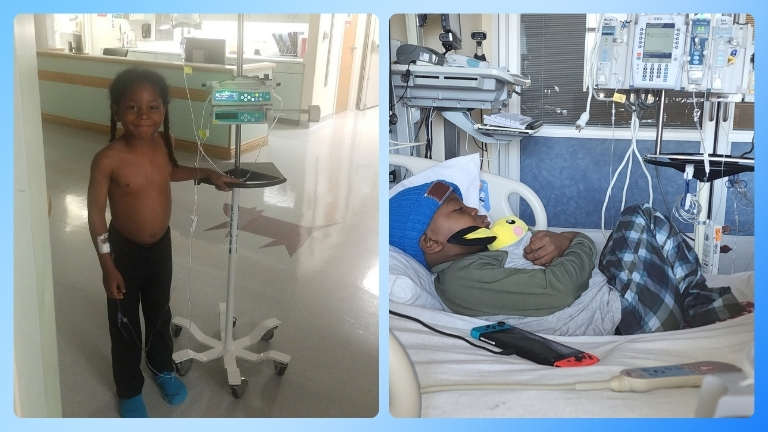
“It takes a village to raise a child,” Curtis said, “and we are grateful we had a village.” Isaac’s older sisters, Alysa and Caitlin, and both sets of grandparents learned how to care for him. Teachers and school staff learned to recognize when Isaac needed to sit down or rest.
Although Shaundell is a nurse, she had not worked with sickle cell disease before Isaac's diagnosis. She found herself piecing together an education by connecting with other families through PossAbilities Sickle Cell Support Group in Loma Linda and Cayenne Wellness Center. "You really have to educate yourself," she said.
A Choice That Preserved a Future Option
When Shaundell became pregnant with Isaac’s younger brother, Nathan, the family began looking beyond symptom management. They learned that, for certain patients, a blood or bone marrow transplant may offer a potential cure for sickle cell disease.
As the family explored transplant options, they also learned that preserving a newborn sibling’s cord blood could create a future treatment opportunity. Shaundell contacted Cryo-Cell, and the family received support through the Sibling Donor Transplant Program.
When Nathan was born in the fall of 2015, his cord blood was collected and cryopreserved. The family made that decision before HLA testing confirmed whether he would be a suitable match, preserving the cells so they would be available if needed.
For years, the family asked whether their other children could be tested as potential donors for Isaac. After they connected with a sickle cell specialist at Children’s Hospital Los Angeles, the whole family was tested. Two of Isaac’s siblings were matches: his sister Caitlyn and Nathan, whose cord blood had been cryopreserved at Cryo-Cell International.
The Long-Awaited Transplant
The family expected to move forward around 2019 or 2020, but the COVID-19 pandemic changed the timeline. Because transplant preparation would leave Isaac with severely reduced immune defenses, his medical team advised the family to wait until it was safer to proceed.
On June 15, 2022, after approximately 12 days of chemotherapy to prepare his body, Isaac received Nathan’s banked cord blood stem cells. The infusion lasted nearly two and a half hours. Nathan’s bone marrow, collected earlier that day, followed. Doctors used both sources because Isaac needed more donor cells than the cord blood unit alone could provide.
When Nathan woke up from anesthesia, he asked his parent, "Did Isaac's sickle cell go away yet?
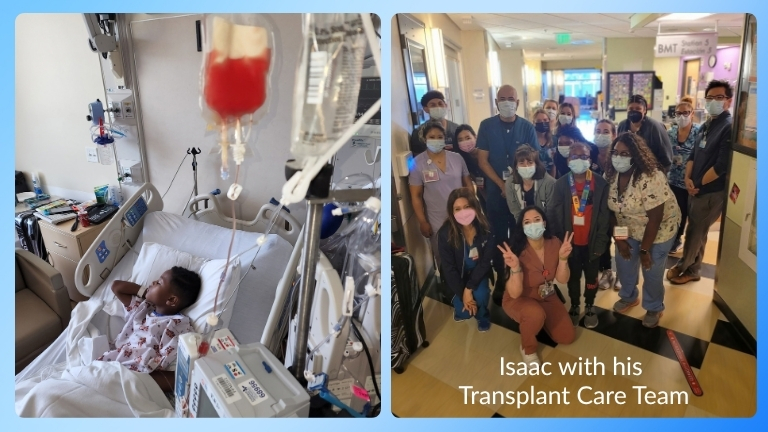
Isaac’s blood counts rose sooner than his care team expected. His family and medical team believe the cord blood infusion contributed to the early blood-cell recovery. Isaac spent 50 days in the hospital and then nearly four months at the Ronald McDonald House near the hospital for follow-up care.
One of the most memorable moments came on the Fourth of July. Isaac watched from his hospital window as his siblings stood outside holding homemade light-up signs, helping him celebrate from a distance.
Isaac was cured of sickle cell disease. That statement seems surreal, honestly. How many diseases can you say, 'hey, there's a cure for this?'
— Curtis Hopkins
On discharge day, Isaac walked out of the hospital for good. His transplant team lined the hallway to cheer him on as he rang the unit’s victory bell, a tradition marking the end of treatment. In the transplant team photo stood Nurse Brian, Isaac's primary nurse during the transplant, in teal scrubs.
Isaac said, "I want to be a nurse like him. I want to come in and take care of kids like he took care of me."
Celebrating the Gift of "Normal"

Today, Isaac has not been hospitalized since his discharge. He continues to be followed by his medical team, but his parents measure the outcome in the quiet, ordinary moments of childhood rather than medical terminology.
Isaac now attends high school, swims, and plays sports. Recently, when he tried out for the basketball team, he was disappointed that he didn't make the final roster. For Curtis and Shaundell, it was a moment of pure joy. They said, "he was able to try out for basketball after years of not being able to play sports. That was the win for us."
Isaac and Nathan argue and protect each other like brothers do. "I don't think Nathan has truly grasped everything he did for his brother. " Curtis said, then jokingly added, "When he does, he's going to hold it over his head for the rest of time."
The Hopkins family hopes other families affected by sickle cell disease will have an easier time finding information and community support. "Educate yourself and talk to people," Shaundell said. "Find a community where you can learn what's out there." For Isaac, that education, combined with access to his brother's donated stem cells, changed the course of his life.
These days, Isaac is busy being a 14-year-old: shooting free throws, swimming laps, and giving his younger brother a hard time. For the Hopkins family, that is what life beyond sickle cell disease looks like.

Cryo-Cell's Donor Transplant Program provides cord blood banking support for eligible families with a qualifying medical need. Contact Cryo-Cell to learn more about program requirements and available support.
Learn More About Cryo-Cell's Donor Transplant Program
This story includes direct quotes from a minor, shared with full parental knowledge and consent. Medical outcomes vary. Transplant eligibility, donor matching, treatment decisions, and potential risks should be evaluated by a qualified transplant team. This story reflects one family's experience and is not a guarantee of results.